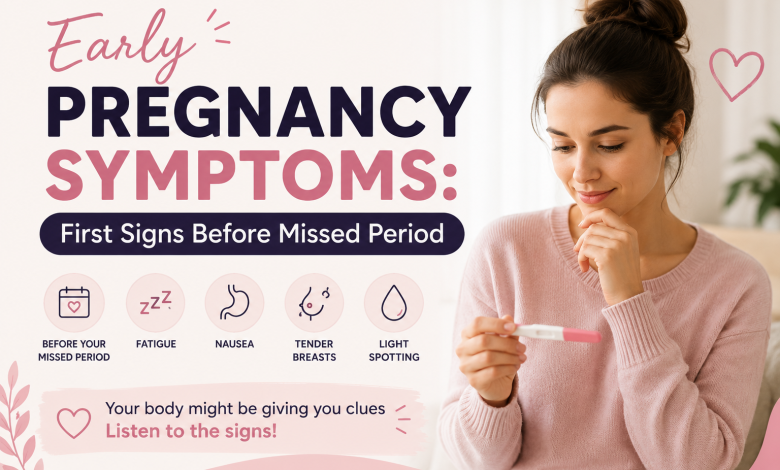
Early Pregnancy Symptoms: First Signs Before Missed Period
You think you might be pregnant.
But you’re not sure.
Your period isn’t due for another week, and you’re searching “early pregnancy symptoms” at 2 AM because you can’t sleep.
Here’s what’s happening: You’re looking for ANY sign that pregnancy might be real.
One website says you can feel pregnancy symptoms 3 days after conception. Another says you can’t know until after a missed period. You read conflicting information and convince yourself that every tiny body change means something.
Then your period comes. Or it doesn’t. And you’re left wondering.
Here’s the truth: Early pregnancy symptoms are REAL, but they’re also easily confused with period symptoms.

The problem is that pregnancy symptoms and PMS symptoms are almost identical (both caused by hormones). So early detection is genuinely difficult.
But there ARE some signs that might appear before your missed period. And there ARE symptoms that are more likely to be pregnancy than PMS.
In this guide, I’m covering:
- When pregnancy symptoms start (realistic timeline)
- Most common early symptoms (what most pregnant women experience)
- Less common symptoms (that many pregnant women have)
- Pregnancy vs. PMS (how to tell the difference)
- False positives (symptoms that aren’t pregnancy)
- When to take a pregnancy test (timing matters)
- When to call your doctor (if something feels wrong)
By the end, you’ll understand what early pregnancy symptoms actually are—and when you should take a test or contact your doctor
The Timeline: When Do Early Pregnancy Symptoms Start?
This is the most confusing part of early pregnancy: When do symptoms actually start?
The answer: It varies dramatically.
The Science:
Implantation happens 6-12 days after conception.
Only AFTER implantation can your body start producing human chorionic gonadotropin (hCG), the pregnancy hormone.
Only AFTER hCG starts can you experience pregnancy symptoms.
So here’s the realistic timeline:
Days 1-5 after conception: No symptoms (nothing is happening hormonally)
Days 6-12 after conception: Possible implantation, hCG might start (very early symptoms possible but uncommon)
Days 12-14 after conception: hCG is rising, symptoms might begin (still very early)
Days 14+ after conception: hCG is higher, symptoms more likely (but still not guaranteed)
After missed period: hCG is definitely present, symptoms are established
The Reality:
Most pregnant women don’t notice symptoms until:
- After missed period (most common)
- 1-2 weeks after conception (some women)
- Never noticeable (some women have no symptoms at all)
The idea that you can “feel” pregnancy 2-3 days after intercourse? Not realistic. Your body hasn’t changed yet.
Most Common Early Pregnancy Symptoms
If you ARE experiencing early pregnancy symptoms, these are the most common:
#1: Breast Tenderness (Sore, Sensitive Breasts)
How common: 70-80% of pregnant women experience this
When it appears: Often 1-2 weeks after conception (before missed period)
What it feels like:
- Breasts feel swollen or full
- Nipples are extremely sensitive
- Even light touch or bra pressure is uncomfortable
- Feels similar to PMS breast tenderness (but often more intense)
Why it happens:
- Hormones (progesterone) cause breast tissue to change
- Increased blood flow to breasts
- Glands preparing for milk production
Important note:
- Breast tenderness can last throughout pregnancy (not just early pregnancy)
- It usually improves after first trimester
- One of the most reliable early signs
#2: Fatigue (Extreme Tiredness)
How common: 50-60% of pregnant women experience this
When it appears: Often 1-2 weeks after conception (can appear before missed period)
What it feels like:
- Exhaustion that doesn’t improve with sleep
- Difficulty getting out of bed
- Brain fog (hard to concentrate)
- Needing afternoon naps
- Feeling like you have the flu (but without being sick)
Why it happens:
- Progesterone hormone causes drowsiness
- Body working hard to support pregnancy
- Increased blood volume demands energy
Important note:
- Fatigue is one of the earliest symptoms many pregnant women notice
- It’s often dismissed as stress or illness
- Fatigue usually improves by second trimester
#3: Nausea (Morning Sickness)
How common: 70-80% of pregnant women experience this
When it appears: Usually after missed period, but can start at 2-3 weeks post-conception
What it feels like:
- Queasy feeling (might or might not vomit)
- Worse in morning (but can happen any time)
- Triggered by certain foods or smells
- Worse when hungry
- Improves by end of first trimester for most
Why it happens:
- Rising hCG hormone
- Increased estrogen
- Digestive system changes
- Heightened sense of smell
Important note:
- Called “morning sickness” but happens all day for some
- Usually peaks at 8-10 weeks, then improves
- Some women never experience it (totally normal)
#4: Frequent Urination
How common: 60-80% of pregnant women experience this
When it appears: Usually after missed period, but can start earlier
What it feels like:
- Needing to urinate more often than usual
- Getting up multiple times per night to pee
- Feeling like you need to go, but producing small amounts
Why it happens:
- Pregnancy hormone hCG increases blood flow to kidneys
- Increased blood volume (pregnancy produces more blood)
- Hormones affect bladder function
Important note:
- Doesn’t improve throughout pregnancy (actually gets worse)
- Not a sign of urinary tract infection
- Completely normal
#5: Mild Cramping
How common: 30-40% of pregnant women experience this
When it appears: Often 3-4 weeks after conception (around time of missed period)
What it feels like:
- Mild cramping (similar to period cramps)
- Usually in lower abdomen
- Often one-sided
- Mild, not severe
Why it happens:
- Uterus is expanding
- Implantation can cause light cramping
- Ligaments stretching as uterus grows
Important note:
- This is different from severe cramping (which requires doctor visit)
- Often accompanied by light spotting
- Usually stops after first trimester
#6: Mood Changes
How common: 40-60% of pregnant women experience this
When it appears: Often 1-2 weeks after conception
What it feels like:
- Feeling more emotional than usual
- Crying easily
- Mood swings (happy one minute, sad the next)
- Irritability or impatience
- Heightened anxiety
Why it happens:
- Rapid hormone changes (progesterone and estrogen)
- Adjustment to pregnancy realization
- Anticipation/anxiety about pregnancy
Important note:
- Mood changes continue throughout pregnancy
- Often worse first trimester, improve second trimester
- If severe, talk to doctor (postpartum depression can start in pregnancy)
#7: Food Aversions & Cravings
How common: 50-90% of pregnant women experience this
When it appears: Often after missed period, but can start earlier
What it feels like:
- Sudden disgust at foods you normally like
- Strong cravings for specific foods
- Changed taste preferences
- Metallic taste in mouth
Why it happens:
- Hormone changes affect taste and smell
- Body’s way of protecting developing baby
- Heightened sense of smell
Important note:
- Cravings can be very specific (pickles and ice cream is real)
- Aversions often disappear second trimester
- Listen to cravings (body usually knows what it needs)
#8: Spotting or Light Bleeding
How common: 20-25% of pregnant women experience this
When it appears: Usually 6-12 days after conception (around implantation)
What it feels like:
- Light spotting (pink or brown discharge)
- May last a day or two
- Lighter than period flow
- Usually stops quickly
Why it happens:
- Implantation bleeding (embryo implanting in uterus)
- Cervical changes (increased blood flow)
- Hormonal changes
Important note:
- NOT a sign of miscarriage (but heavy bleeding can be—call doctor)
- Often confused with period (but lighter and shorter)
- Can happen alongside other symptoms
Less Common But Real Early Pregnancy Symptoms
Some pregnant women experience symptoms that are less common:
#9: Headaches
- Hormone changes can trigger headaches
- Increased blood volume increases pressure
- Usually temporary
- Contact doctor if severe or new pattern
#10: Dizziness or Lightheadedness
- Lower blood pressure in early pregnancy
- Anemia (if not enough iron)
- Increased blood volume changes
- Usually improves with rest, hydration, nutrition
#11: Elevated Body Temperature
- Progesterone naturally raises body temperature
- Slight elevation (0.5-1 degree) is common
- Might feel feverish without being sick
- Improves as pregnancy progresses
#12: Constipation
- Progesterone slows digestive system
- Can happen very early in pregnancy
- Often worsens as pregnancy progresses
- Increase fiber and water
#13: Tender Lower Back
- Ligaments loosening (relaxin hormone)
- Weight distribution changes
- Usually resolves with support, stretching
- Worsens later in pregnancy
#14: Heightened Sense of Smell
- Estrogen increases olfactory sensitivity
- Smells you didn’t notice before become overwhelming
- Can contribute to nausea
- Usually improves second trimester
Early Pregnancy vs. PMS: How to Tell the Difference
This is the hardest part of early detection: Pregnancy symptoms and PMS symptoms are IDENTICAL.
Both are caused by hormone changes. Both happen around the same time.
Here’s the comparison:
| Symptom | Early Pregnancy | PMS |
|---|---|---|
| Breast Tenderness | Lasts beyond period due date | Goes away when period starts |
| Fatigue | Intense, ongoing | Usually improves after period |
| Mood Changes | Continues after period due date | Usually resolves when period starts |
| Cramping | Mild, longer duration | Usually more intense, shorter |
| Food Cravings | Very specific, intense | Usually for salty/sugary foods |
| Spotting | Light, implantation bleeding | Heavier flow (actual period) |
| Nausea | Continues past period due date | Rare with PMS |
| Frequency of Urination | Continues increasing | Usually normalizes |
The Real Difference:
PMS symptoms resolve when your period starts.
Pregnancy symptoms continue (and often intensify).
False Positives: Symptoms That AREN’T Pregnancy
You might be experiencing symptoms that feel like pregnancy but aren’t:
Stress or Anxiety
- Can cause: Fatigue, mood changes, frequent urination, nausea
- Often mistaken for pregnancy
- Resolve when stress decreases
Illness or Flu
- Causes: Fatigue, nausea, body aches, fever
- Similar to pregnancy symptoms
- Usually has fever (pregnancy doesn’t)
Caffeine Sensitivity
- Causes: Jitteriness, headaches, anxiety
- Can happen suddenly
- Resolves when caffeine reduced
Thyroid Issues
- Causes: Fatigue, mood changes, weight changes
- Can mimic early pregnancy
- Blood test can diagnose
Medication Side Effects
- Many medications cause nausea, fatigue, mood changes
- Talk to doctor about side effects
- Don’t stop medication without doctor approval
High Stress Job or Life Changes
- Causes: All early pregnancy symptoms
- Hormones from stress mimic pregnancy hormones
- Don’t assume pregnancy without test
When to Take a Pregnancy Test
The short answer: After missed period is most reliable.
Timing Matters:
Before missed period:
- Very early tests (like 10 days after conception) might detect hCG
- But false negatives are common (test shows negative, but you’re pregnant)
- Accuracy is only 50-70% before missed period
After missed period (Day 1 or later):
- Accuracy is 99%+
- hCG levels are high enough to detect reliably
- Both urine and blood tests accurate
When to take the test:
- First morning urine is most concentrated (most reliable)
- Or hold urine for 3-4 hours before testing
- Follow test instructions carefully
Types of tests:
- Urine tests (home pregnancy tests): Accurate, convenient, cheap
- Blood tests (from doctor): Can detect hCG earlier, more sensitive, requires lab visit
- Quantitative blood test (hCG levels): Shows exact hCG levels, monitors pregnancy
If Test is Negative But No Period:
- Wait 3-5 days and test again (hCG might not be high enough yet)
- Contact doctor if period is late (could be other causes)
- Some women don’t get positive results until weeks after missed period
If Test is Positive:
- Contact your doctor to confirm (they might do blood test)
- Schedule first prenatal appointment
- Start taking prenatal vitamins
- Stop any substances that could harm pregnancy (smoking, alcohol, certain medications)
When to Call Your Doctor
Call your doctor if you experience:
Concerning Symptoms:
Severe cramping or pain
- Mild cramping is normal
- Severe, persistent pain is not
- Could indicate ectopic pregnancy or other issues
Heavy vaginal bleeding
- Light spotting is normal
- Heavy bleeding (soaking pads) is not
- Contact doctor immediately
Severe nausea/vomiting
- Unable to keep down food or liquids
- Losing weight
- Could indicate hyperemesis gravidarum (requires treatment)
Fainting or severe dizziness
- Normal dizziness is mild
- Fainting requires medical attention
Severe headache
- New, intense headaches require evaluation
- Could indicate high blood pressure
Vision changes
- Blurred vision or spots
- Could indicate blood pressure issues
Abdominal or pelvic pain
- Sharp pain
- Pain on one side (possible ectopic pregnancy)
Fever over 100.4°F (38°C)
- Could indicate infection
- Requires treatment
Questions to Ask Your Doctor:
Once you have a positive pregnancy test:
- “When should my first appointment be?”
- “What prenatal vitamins should I take?”
- “What foods should I avoid?”
- “Is it safe to exercise?”
- “Should I stop any medications?”
- “What symptoms should concern me?”
FAQ: Early Pregnancy Symptoms Questions Answered
Q: Can you feel pregnant immediately after intercourse?
A: No. Your body hasn’t changed yet.
Pregnancy doesn’t start with intercourse—it starts when:
- Sperm fertilizes egg
- Fertilized egg travels to uterus
- Embryo implants in uterine wall
- Body starts producing hCG hormone
This takes 6-12 days minimum. You can’t feel it happening.
Q: Is spotting always a sign of miscarriage?
A: No. Light spotting is common in early pregnancy.
Spotting can be:
- Implantation bleeding (normal)
- Cervical changes (normal)
- Threatened miscarriage (bleeding but continues)
- Actual miscarriage (heavy bleeding)
Call doctor about any bleeding to be safe.
Q: Why do some pregnant women have no symptoms?
A: About 20-30% of pregnant women have minimal or no symptoms.
This is completely normal and doesn’t mean:
- Something is wrong
- Baby isn’t developing
- You’re not really pregnant
Some people just don’t experience hormonal symptoms. That’s okay.
Q: Can anxiety mimic pregnancy symptoms?
A: Yes. Anxiety causes:
- Nausea
- Fatigue
- Mood changes
- Frequent urination
- Heart palpitations
The difference: pregnancy symptoms persist, anxiety symptoms worsen with stress and improve when stress decreases.
Q: How accurate are early pregnancy tests?
A: It depends on timing:
- 10 days after conception: 50-70% accurate
- At missed period: 90%+ accurate
- 2 weeks after missed period: 99%+ accurate
Use after missed period for best results.
Q: Can medication cause false pregnancy symptoms?
A: Yes. Many medications cause:
- Nausea
- Fatigue
- Mood changes
- Hormonal changes
Talk to doctor about medication side effects. Don’t stop taking medications without approval.
Q: What if only some symptoms appear, not all?
A: You don’t need all symptoms to be pregnant.
Some pregnant women have:
- Just breast tenderness
- Just fatigue
- Just nausea
- Just mood changes
A few symptoms are enough. Everyone experiences pregnancy differently.
Q: When do pregnancy symptoms go away?
A: Usually:
- First trimester (weeks 1-12): Strongest symptoms
- Second trimester (weeks 13-27): Many improve
- Third trimester (weeks 28-40): Different symptoms appear (back pain, fatigue returns)
- After birth: Postpartum hormonal adjustments take weeks
The Bottom Line
Early pregnancy symptoms are real, but they’re also confusing.
Here’s what you need to know:
✅ Symptoms can start before missed period (but not reliably)
✅ Most symptoms feel like PMS (because both are hormonal)
✅ Breast tenderness and fatigue are most common early signs (appear 50-70% of the time)
✅ Testing after missed period is most reliable (99%+ accurate)
✅ You don’t need all symptoms to be pregnant (different for everyone)
✅ Some women have no symptoms at all (still perfectly pregnant)
✅ Trust a pregnancy test over symptom guessing (tests don’t lie)
The safest approach: Wait until missed period, take a test, call your doctor with results.
Related Guides
Want more early pregnancy information?
Check out these:
- [Sex During Pregnancy: Safety, Positions, & When to Avoid] – Understanding intimacy during pregnancy
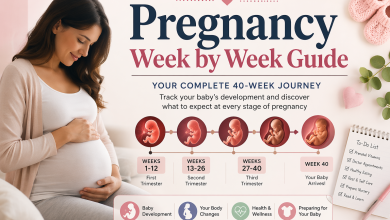
- [Pregnancy Week-by-Week Guide] – What happens each week