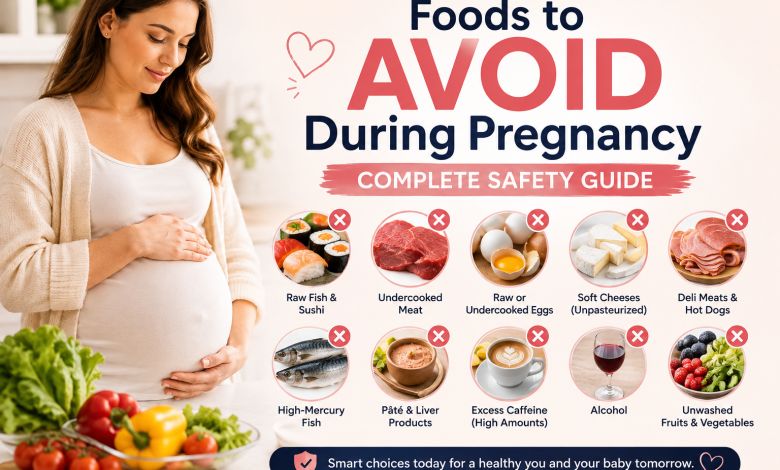
Foods to Avoid During Pregnancy: Complete Safety Guide
You’re pregnant. And suddenly, food feels dangerous.
You’re at a restaurant and your friend orders a sushi roll. You see deli meat at the grocery store. Your partner makes an omelet. And you freeze: “Is this safe?”
Everyone has different advice:
- Your mom says you can’t eat anything cold
- Your friend ate sushi throughout her pregnancy
- The internet says raw fish will hurt your baby
- Your doctor said to avoid processed meat
- Another website says occasional deli meat is fine
No wonder you’re confused.
Here’s the truth: Some foods actually do pose risks during pregnancy. But many “forbidden foods” are completely safe.
The risk isn’t the food itself—it’s potential contamination or specific ingredients that could harm your baby.
Once you understand WHY certain foods are risky, you can make informed decisions.
In this guide, I’m covering:
- Foods to actually avoid (evidence-based, not myths)
- Why these foods are risky (the science)
- Safe alternatives (what you can eat instead)
- Contamination prevention (how to reduce risks)
- Myth-busting (foods that are actually safe)
- When to be extra careful (if you’re high-risk)
By the end, you’ll understand pregnancy food safety—and stop worrying about foods that are actually fine.
The Real Risk: Foodborne Infections During Pregnancy
Pregnancy food restrictions aren’t about the food itself.
They’re about preventing foodborne infections that could harm your baby.
Why Pregnancy Makes You Vulnerable:
During pregnancy, your immune system changes:
- Becomes less aggressive (to protect baby’s foreign genes)
- Listens less effectively to bacterial invaders
- Can’t fight off certain bacteria as effectively
This means: Bacteria that wouldn’t hurt a non-pregnant person can seriously hurt a pregnant woman and her baby.
The Most Dangerous Bacteria:
1. Listeria monocytogenes
- Found in: Raw/undercooked meat, unpasteurized dairy, processed meats
- Risk: Miscarriage, preterm labor, severe fetal infection
- Prevention: Cook thoroughly, use pasteurized products
2. Salmonella
- Found in: Raw eggs, raw poultry, unwashed produce
- Risk: Severe food poisoning (rarely affects baby directly, but can cause dehydration in mother)
- Prevention: Cook eggs thoroughly, avoid raw chicken
3. Toxoplasma gondii
- Found in: Raw/undercooked meat, unwashed produce
- Risk: Fetal infection causing severe complications (rare but serious)
- Prevention: Cook meat thoroughly, wash produce
4. E. coli
- Found in: Contaminated water, unwashed produce
- Risk: Severe food poisoning, dehydration
- Prevention: Wash produce, use clean water
The Bottom Line:
Food restrictions aren’t arbitrary. They’re designed to prevent specific bacterial infections that could harm your pregnancy.
Understanding the “why” helps you make smart decisions instead of just following rules.
Foods to Actually Avoid During Pregnancy
1. RAW OR UNDERCOOKED MEAT
Risk: Listeria, Salmonella, Toxoplasma, E. coli
Includes:
- Undercooked beef, pork, lamb
- Raw/rare steak
- Raw meat in carpaccio, tartare
- Undercooked poultry
Why it’s risky:
- Bacteria live in raw meat
- Cooking kills bacteria
- Insufficient cooking = bacteria survives
Safe alternative:
- Cook meat to recommended internal temperatures:
- Beef/pork/lamb: 145°F (63°C)
- Poultry: 165°F (74°C)
- Ground meat: 160°F (71°C)
2. RAW OR UNDERCOOKED EGGS
Risk: Salmonella
Includes:
- Raw eggs
- Sunny-side up (runny yolk)
- Over-easy eggs
- Soft-boiled eggs
- Homemade mayo (if made with raw eggs)
- Homemade eggnog
- Raw cookie dough or cake batter
- Hollandaise sauce (if made with raw eggs)
Why it’s risky:
- Salmonella can live on eggshells and inside eggs
- Raw/undercooked eggs contain live bacteria
- Cooking kills bacteria
Safe alternative:
- Cook eggs until both white and yolk are firm
- Use pasteurized eggs (safer option)
- Use pasteurized egg products in recipes
3. PROCESSED & DELI MEATS
Risk: Listeria
Includes:
- Deli/lunch meat (turkey, ham, roast beef, salami, pepperoni, bologna)
- Hot dogs
- Sausages
- Bacon
- Luncheon meats
- Pâté
- Meat spreads
Why it’s risky:
- Processing doesn’t eliminate Listeria
- Listeria can grow in refrigeration (other bacteria don’t at cold temps)
- Listeria is particularly dangerous in pregnancy
Safe alternative:
- Eat deli meat ONLY if reheated until steaming (kills Listeria)
- Fresh cooked chicken/turkey from rotisserie
- Canned tuna (for sandwiches)
- Eggs or nut butter (protein alternatives)
Important note: If you’ve eaten deli meat during pregnancy, don’t panic. Listeria risk is low, but reheating reduces it further.
4. UNPASTEURIZED DAIRY PRODUCTS
Risk: Listeria
Includes:
- Unpasteurized milk
- Unpasteurized cheese (especially soft cheeses like feta, queso fresco, brie, camembert)
- Unpasteurized ice cream
- Unpasteurized yogurt
- Raw milk products
Why it’s risky:
- Pasteurization kills Listeria
- Unpasteurized products can contain bacteria
- Soft cheeses are especially risky (higher Listeria growth)
Safe alternative:
- Use pasteurized dairy (most store-bought products are)
- Check labels: “Made with pasteurized milk”
- Pasteurized hard cheeses are safe
- Cooked soft cheese is safe (e.g., melted brie on bread)
Important note: Most store-bought cheese IS pasteurized. Risk is mainly from farmers markets or imported cheeses.
5. RAW FISH & SEAFOOD
Risk: Bacteria, Parasites, Mercury (in high-mercury fish), Listeria
Includes:
- Raw fish (sushi, sashimi, ceviche)
- Raw oysters, clams, mussels
- Raw scallops
- Undercooked shrimp/prawns
- High-mercury fish (shark, swordfish, king mackerel, tilefish)
Why it’s risky:
- Raw seafood can contain parasites and bacteria
- Listeria can grow in raw fish
- High-mercury fish can harm fetal development
- Sushi has additional risks (raw eggs in some rolls)
Safe alternatives:
- Cooked fish and seafood
- Low-mercury fish (salmon, sardines, anchovies, trout)
- Cooked sushi rolls (California rolls, cooked shrimp rolls)
- Limit seafood to 2-3 servings per week
- Avoid high-mercury fish entirely
Fish to AVOID:
- Shark
- Swordfish
- King mackerel
- Tilefish
Fish that are LOW-mercury and SAFE:
- Salmon
- Sardines
- Trout
- Anchovies
- Shrimp (cooked)
- Canned light tuna (limit to 6 oz/week)
6. RAW SPROUTS
Risk: E. coli, Salmonella
Includes:
- Raw alfalfa sprouts
- Raw mung bean sprouts
- Raw radish sprouts
- Raw clover sprouts
- Raw broccoli sprouts
Why it’s risky:
- Sprouts grow from seeds in warm, moist conditions
- Perfect environment for bacteria growth
- Bacteria can be on seed surface
- Cannot be fully washed off
Safe alternative:
- Cooked sprouts (cooking kills bacteria)
- Avocado, cucumber, other vegetables instead
- Cooked alfalfa sprouts (if you really want sprouts)
Important note: Pre-packaged sprouts from grocery stores are safer than bulk sprouts, but cooking is safest.
7. UNWASHED PRODUCE
Risk: E. coli, Salmonella, Toxoplasma
Includes:
- Any unwashed fruits or vegetables
- Pre-cut salads (if not kept cold properly)
- Bagged lettuce (if not fresh)
- Unwashed strawberries
Why it’s risky:
- Produce can come into contact with contaminated water/soil
- E. coli can survive on produce
- Toxoplasma can be in soil
Safe alternative:
- Wash all produce thoroughly under running water
- Even “pre-washed” lettuce should be rewashed
- Use produce brush for items like carrots
- Store fresh produce properly (refrigerated if possible)
Important note: The risk from unwashed produce is low, but washing is easy prevention.
8. CERTAIN HERBAL TEAS & SUPPLEMENTS
Risk: Uterine stimulation, miscarriage risk, unknown effects
Includes:
- Herbal teas made from herbs not proven safe:
- Sage (in medicinal amounts)
- Parsley (in medicinal amounts)
- Thyme (in medicinal amounts)
- Red raspberry leaf (in early pregnancy – use only in third trimester)
- Licorice (in large amounts)
- Ginger (in extreme amounts – normal amounts are safe)
Why it’s risky:
- Some herbs stimulate uterine contractions
- Unknown effects on fetus
- Not regulated like drugs
- Interactions with medications
Safe alternative:
- Regular herbal teas in normal amounts (chamomile, peppermint are generally safe)
- Ask doctor before using medicinal herbal teas
- Ginger tea (normal amount) is safe for nausea
- Prenatal vitamins only (not random supplements)
Important note: Occasional herbal tea is usually fine. It’s medicinal-strength or frequent use of certain herbs that’s risky.
9. HIGH-CAFFEINE FOODS & DRINKS
Risk: Miscarriage (if over 200mg/day), reduced fetal growth
Includes:
- Coffee (95-200mg caffeine per cup)
- Strong tea (25-50mg per cup)
- Energy drinks (80-300mg per drink)
- Chocolate (5-10mg per ounce)
- Colas (30-40mg per 12oz)
- Guarana, yerba mate supplements
Why it’s risky:
- High caffeine consumption linked to miscarriage
- Over 200mg/day increases risk
- Caffeine crosses placenta to baby
- Baby cannot metabolize caffeine
Safe alternative:
- Limit caffeine to under 200mg per day
- Switch to decaf coffee
- Herbal tea instead of caffeinated
- Hot chocolate (lower caffeine than coffee)
- Limit soda/energy drinks
Important note: A cup of coffee (95-200mg) is fine. Multiple cups push over 200mg limit.
10. ALCOHOL
Risk: Fetal Alcohol Spectrum Disorder (FASD), birth defects, miscarriage, developmental delays
Includes:
- All alcoholic beverages:
- Beer
- Wine
- Liquor
- Mixed drinks
Why it’s risky:
- Alcohol crosses placenta easily
- Baby’s liver cannot process alcohol
- Causes neurological damage, birth defects
- Even “occasional” drinking has risks
- No safe level established
Safe alternative:
- Complete abstinence (safest)
- Non-alcoholic beer/wine
- Mocktails
- Other beverages
Important note: ACOG and CDC recommend complete abstinence. No amount of alcohol is proven safe.
11. RAW OR UNDERCOOKED PRODUCE (POTENTIALLY CONTAMINATED)
Already covered above, but specific items:
Includes:
- Pre-cut cantaloupe (Listeria risk due to mold on outside transferring to inside)
- Unwashed lettuce/greens
- Unwashed berries
Why it’s risky:
- Listeria can grow on wet produce
- Contaminated water used for produce
Safe alternative:
- Wash produce thoroughly
- For cantaloupe: wash outside before cutting
- Buy whole produce you wash yourself
- Avoid pre-cut produce unless it’s been kept properly cold
12. EXCESS SUGAR & PROCESSED FOODS
Risk: Gestational diabetes, excessive weight gain, poor fetal development
Includes:
- High-sugar drinks (soda, juice, energy drinks)
- Candy and sweets
- Pastries and desserts
- Processed snacks
- Foods high in processed additives
Why it’s risky:
- Increases gestational diabetes risk
- Excessive weight gain
- Poor nutritional value
- Blood sugar spikes affect baby
Safe alternative:
- Natural sugars (fruit)
- Whole grains
- Proteins
- Healthy fats
- Limit sugar to under 25g/day (American Heart Association)
Myth-Busting: Foods That Are Actually Safe
Many pregnant women avoid foods unnecessarily:
SAFE: Sushi (if cooked)
- ❌ Raw fish = not safe
- ✅ Cooked sushi = completely safe
- ✅ Vegetable rolls = completely safe
- ✅ California rolls (imitation crab) = safe
SAFE: Soy Sauce
- Completely safe
- All pasteurized
- Use normally
SAFE: Cheese (if pasteurized)
- ✅ Hard cheese (cheddar, parmesan) = safe
- ✅ Pasteurized soft cheese = safe
- ✅ Melted cheese = safe (even if unpasteurized beforehand)
- ❌ Unpasteurized soft cheese = not safe
SAFE: Honey
- Completely safe for pregnant women
- Concern about botulism doesn’t apply to adults
- Use normally
- Babies under 1 year should avoid
SAFE: Caffeine (in moderation)
- ✅ Under 200mg per day = safe
- ✅ One cup of coffee = safe
- ❌ Multiple coffees or energy drinks = too much
SAFE: Ginger
- Safe for nausea
- Normal amount = no problem
- Has been used for centuries
- Can use throughout pregnancy
SAFE: Peanuts & Tree Nuts
- Completely safe
- Myth that avoiding prevents allergies is false
- Eating nuts may actually reduce allergy risk
- Use normally
SAFE: Spicy Food
- Won’t hurt baby
- Won’t start labor
- May cause heartburn (for you, not baby)
- Use as tolerated
Contamination Prevention: How to Reduce Risks
Even with safe foods, contamination can happen. Here’s how to prevent it:
Food Safety at Home:
Washing Produce:
- Wash under running water (no soap)
- Use produce brush for firm items
- Wash even pre-washed lettuce
- Wash hands after handling raw produce
Cooking Temperatures:
- Use meat thermometer
- Cook to proper internal temperatures
- Don’t rely on color alone
Cross-Contamination:
- Separate raw meat from other foods
- Use different cutting boards for meat vs. produce
- Wash hands after touching raw meat
- Clean surfaces raw meat touched
Storage:
- Refrigerate perishables immediately
- Don’t leave food out over 2 hours (1 hour if over 90°F)
- Store raw meat below produce
- Keep leftover hot foods hot, cold foods cold
Reheating:
- Reheat leftovers to 165°F
- Heat deli meat until steaming (kills Listeria)
- Cover while reheating (prevents contamination)
When Dining Out:
Ask Questions:
- Ask how meat is cooked
- Request cooked versions of dishes
- Ask about ingredients (raw eggs in mayo, etc.)
- Request no raw or undercooked items
Make Requests:
- No raw sprouts
- Cook meat thoroughly
- Pasteurized cheese only
- Cooked fish only
Choose Safe Options:
- Burgers (well-done, hot)
- Cooked chicken
- Pasta with cooked sauce
- Cooked vegetables
- Fruit (washed, whole)
For High-Risk Pregnancies
If you have a high-risk pregnancy, follow your doctor’s specific guidance.
Additional restrictions might include:
If history of miscarriage:
- May be more cautious with caffeine
- Avoid any suspicious foods
- Follow doctor’s specific advice
If gestational diabetes:
- Strict sugar/carb control
- Balanced meals
- Follow diabetes dietitian guidance
If immunocompromised:
- More cautious with all foods
- Consider additional precautions
- Work with doctor/dietitian
If allergies:
- Avoid your specific allergens
- Prenatal vitamins without your allergen
- Ensure adequate nutrition despite restrictions
FAQ: Pregnancy Food Safety Questions Answered
Q: I accidentally ate deli meat—did I hurt my baby?
A: Probably not. One serving of deli meat is unlikely to cause infection.
Listeria risk is real but not huge:
- Affects 1,600 pregnant women per year in US
- Most pregnant women eat deli meat without problems
- Risk is higher with frequent consumption
If worried:
- Call doctor (they might recommend monitoring)
- Watch for flu-like symptoms (fever, muscle aches)
- Reheat deli meat if eating it again
Q: Is all cheese unsafe?
A: No. Most store-bought cheese is safe.
What’s safe:
- ✅ Hard cheese (cheddar, parmesan, feta from pasteurized milk)
- ✅ Pasteurized soft cheese
- ✅ Melted cheese (even if unpasteurized originally)
What to avoid:
- ❌ Unpasteurized soft cheese (especially imported)
How to know:
- Check label: “Made with pasteurized milk”
- If no label visible, ask at store
- Most supermarket cheese is pasteurized
Q: Can I eat sushi?
A: Only if cooked.
What’s safe:
- ✅ Cooked sushi (california rolls, shrimp rolls, cooked salmon rolls)
- ✅ Vegetable rolls
- ✅ Avocado rolls
What to avoid:
- ❌ Raw fish sushi
- ❌ Raw scallop
- ❌ Any raw seafood
Q: Is there a safe level of alcohol?
A: Medical organizations recommend zero.
ACOG (American College of Obstetricians):
- Zero alcohol recommended
- No safe level established
- Alcohol crosses placenta
- Can cause fetal alcohol spectrum disorder
If you’ve had alcohol early in pregnancy (before knowing you were pregnant):
- Don’t panic
- Single exposure is unlikely to cause harm
- Stop drinking now
- Talk to doctor
Q: What about vitamin A from supplements?
A: High-dose vitamin A is risky.
What’s safe:
- ✅ Prenatal vitamins with normal vitamin A
- ✅ Food sources of vitamin A (sweet potato, carrots, spinach)
What to avoid:
- ❌ High-dose vitamin A supplements (over 10,000 IU)
- ❌ Retinol supplements
- ❌ Isotretinoin (Accutane) for acne
Regular prenatal vitamins are formulated safely.
Q: How much caffeine is actually safe?
A: Under 200mg per day.
Examples:
- One 8oz cup of coffee = 95-200mg (safe)
- Two cups = over 200mg (too much)
- One energy drink = 80-300mg (often too much)
- One cola = 30-40mg (fine)
- Chocolate = 5-10mg per ounce (fine)
- Herbal tea = 0mg (safe)
Calculate your intake and stay under 200mg.
Q: Is it okay to have cravings?
A: Yes, and trust them (usually).
Food cravings during pregnancy:
- Often signal nutritional needs
- Usually safe to follow
- Listen to your body
- If craving something unsafe: find safe alternative
The Bottom Line
Pregnancy food safety is about preventing bacterial infections—not avoiding all risky foods.
Here’s what you need to know:
✅ Cook meat thoroughly (kills bacteria)
✅ Use pasteurized dairy (kills Listeria)
✅ Wash produce (removes contamination)
✅ Avoid high-mercury fish (protects fetal development)
✅ Limit caffeine to under 200mg (under the miscarriage threshold)
✅ Don’t drink alcohol (no safe level established)
✅ Reheat deli meat until steaming (kills Listeria)
✅ Trust your doctor’s specific guidance (for your situation)
You don’t need to eat “boring” food. You just need to eat safely.
Related Guides
Want more pregnancy nutrition information?
Check out these:
- [Early Pregnancy Symptoms: First Signs Before Missed Period] – Pregnancy signs
- [Pregnancy Week-by-Week Guide] – What happens each week