
Best Breast Pump for Working Moms (2026) – Fast, Quiet & Portable Picks
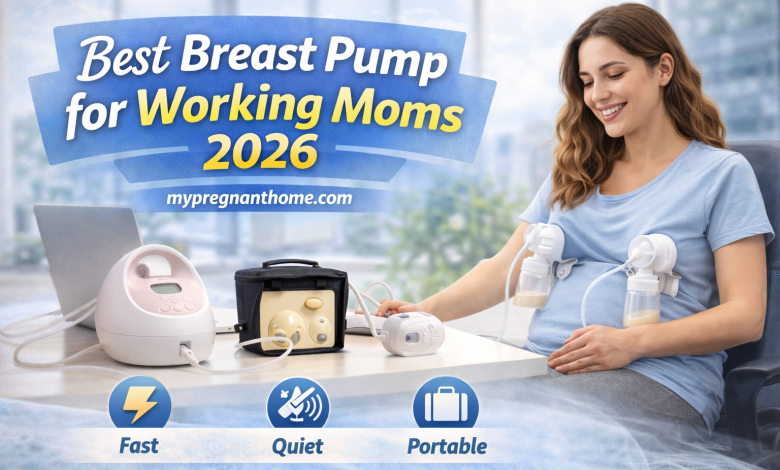
Returning to work while breastfeeding can feel overwhelming—especially when you’re trying to maintain your milk supply during busy workdays.
The right breast pump can make all the difference, helping you save time, stay comfortable, and pump discreetly, even in a busy office.
The best breast pump for working moms combines efficiency, portability, and comfort—allowing you to express milk quickly during work breaks, store it safely, and maintain your milk supply without sacrificing your professional responsibilities or mental health.
In this comprehensive guide, we’ll review the top breast pumps designed specifically for working mothers, explain key features to prioritize, and help you choose the perfect pump for your lifestyle and work situation.
Why Working Moms Need the Right Breast Pump
The working mom challenge:
Returning to work while breastfeeding requires careful planning and equipment. You need a pump that:
- Saves time: Quick expression during limited work breaks (15-20 minutes)
- Is portable: Fits discreetly in your work bag for commute and office use
- Maintains supply: Effective stimulation prevents supply drops from reduced nursing
- Is comfortable: Pumping multiple times daily should never be painful
- Is reliable: Mechanical failures at work create stress and lost milk
- Empowers you: The right pump reduces anxiety about returning to work
Why breast pump choice matters:
Many working moms abandon breastfeeding not because they want to, but because they chose the wrong pump. An inefficient or uncomfortable pump creates stress, pain, and time management nightmares. Conversely, the right pump feels empowering—allowing you to maintain breastfeeding while thriving at work.
Key Features for Working Moms’ Breast Pumps
Before reviewing specific models, let’s discuss what distinguishes excellent pumps for working mothers from mediocre ones.
Pumping speed: Working moms need efficient pumps. Look for pumps that empty both breasts in 15-20 minutes, not 30-45 minutes. Double electric pumps (both breasts simultaneously) are essential for time-strapped moms.
Portability and discreetness: Your pump must fit in a regular work bag without drawing attention. Compact, lightweight designs allow you to pump in your car, office, or nursing room without awkwardness.
Quiet operation: Office environments require silent or near-silent pumps. Loud pumping sounds create embarrassment and stress. Look for pumps under 50 decibels.
Battery or USB charging: Wireless pumps with long battery life eliminate cord limitations. USB charging allows charging at your desk without special cables.
Comfort and customization: Adjustable suction levels, multiple flange sizes, and cushioned horns prevent pain and damage from frequent daily pumping.
Milk expression efficiency: Working moms need pumps that effectively stimulate milk letdown and complete emptying, preventing engorgement and maintaining supply.
Easy cleaning: Fewer parts and quick-clean designs reduce time spent on maintenance—crucial when you’re busy with work and baby.
Durability: Pumps used 2-3 times daily need to withstand frequent use and still function reliably after months of daily pumping.
Best Breast Pumps for Working Moms: Our Top Picks
1. Spectra S2 Plus Electric Breast Pump
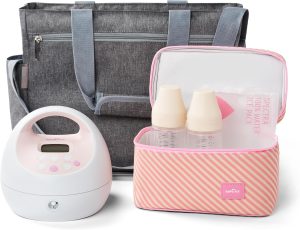
Price: $200-$220 Type: Double electric, rechargeable Pumping time: 15-20 minutes both breasts Weight: 1.2 lbs (portable) Battery: 24 hours full charge, USB rechargeable Noise level: 50 decibels (quiet)
The Spectra S2 Plus is the gold standard for working mothers—trusted by lactation consultants and recommended by healthcare providers worldwide. Its combination of efficiency, portability, and reliability makes it the most popular pump among working moms.
Why we love it:
- Incredibly efficient (empties both breasts in 15-20 minutes)
- Quiet operation won’t draw attention at work
- USB rechargeable (charge at desk)
- Compact and lightweight fits any work bag
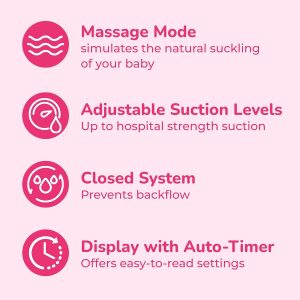
- Customizable suction and speeds (9 levels)
- Multiple flange sizes included
- Closed system prevents milk backflow
- Excellent reviews from working mothers
- Industry-leading durability
Best for: Working moms wanting the most reliable, efficient, time-saving pump
Check Latest Price on Amazon (Limited Deals)
2. Medela Pump in Style Advanced Breast Pump
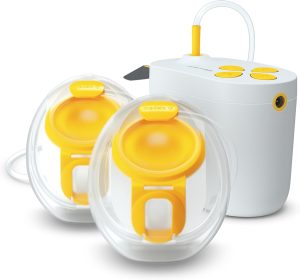
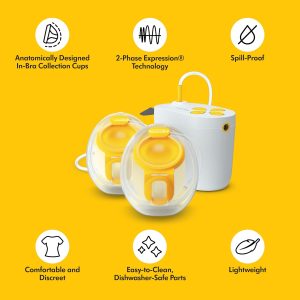
Price: $100-$120 Type: Double electric, rechargeable Pumping time: 15-25 minutes both breasts Weight: 1.4 lbs Battery: 24 hours full charge, USB rechargeable Noise level: 52 decibels
Medela is the most recognized pump brand globally, used in hospitals and recommended by lactation professionals. Their Pump in Style combines trusted Medela technology with modern working-mom convenience.
Why we love it:
- Two-phase expression mimics natural nursing (increases milk flow)
- Very efficient and effective supply maintenance
- Professional quality from trusted brand
- Fits in stylish carrying case (looks like regular work bag)
- Multiple suction settings
- Closed system design
- Long battery life
- Excellent customer support and warranty
Best for: Working moms wanting hospital-grade quality in a portable package
Check Latest Price on Amazon (Limited Deals)
3. Lansinoh Smarti Breast Pump
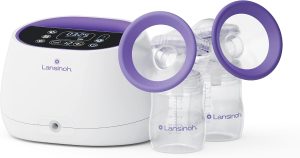
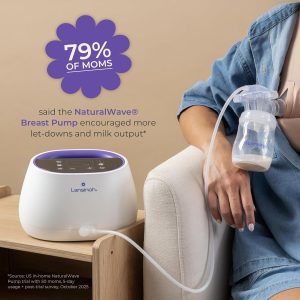
Price: $170-$200 Type: Double electric, rechargeable, smart features Pumping time: 15-25 minutes both breasts Weight: 1.3 lbs Battery: 20+ hours Noise level: 55 decibels
Lansinoh’s Smarti combines traditional pumping with modern smart features, including app tracking and customizable profiles.
Why we love it:
- Very affordable for the features
- Multiple suction levels and styles
- App tracks pumping data
- USB rechargeable
- Good battery life
- Lightweight and portable
- Closed system
- Excellent durability
- Great reviews from working moms
Best for: Budget-conscious working moms wanting smart features
Check Latest Price on Amazon (Limited Deals)
4. Ameda Mya Wearable Breast Pump
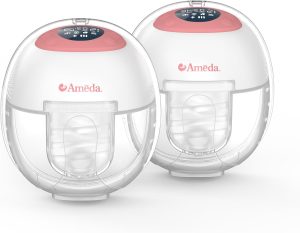
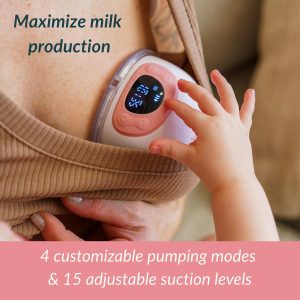
Price: $149-$200 Type: Wearable, semi-hands-free Pumping time: 20-30 minutes Weight: Per cup weight Battery: 2+ hours Noise level: Very quiet
Ameda’s Mya offers wearable convenience at a lower price point than Willow or Elvie, making it accessible for price-conscious working moms wanting hands-free benefits.
Why we love it:
- Most affordable wearable option
- Hands-free pumping
- Discreet under clothing
- Good suction strength
- Simple to use (fewer buttons)
- Lightweight
- Durable design
- Great value for money
Best for: Budget-conscious working moms wanting wearable convenience
Check Latest Price on Amazon (Limited Deals)
5. Momcozy Double Electric Breast Pump
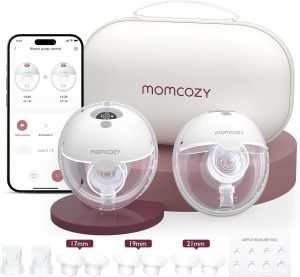
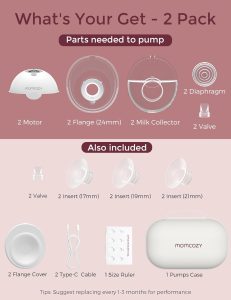
Price: $130-$230 Type: Double electric, rechargeable Pumping time: 20-30 minutes both breasts Weight: 1.1 lbs Battery: 18 hours Noise level: Moderately quiet (58 decibels)
Momcozy offers exceptional value—premium features at budget-friendly prices. While not as fast as premium brands, it’s reliable for working moms on tight budgets.
Why we love it:
- Extremely affordable ($99-130)
- Double electric (both breasts)
- USB rechargeable
- Multiple suction levels
- Lightweight and portable
- Quiet operation
- Good reviews for the price
- Durable construction
Best for: Budget-conscious working moms needing reliable double pumping
Check Latest Price on Amazon (Limited Deals)
Breast Pump Comparison Table
| Pump | Price | Type | Time | Portable | Quiet | Best For | Rating |
|---|---|---|---|---|---|---|---|
| Spectra S2 Plus | $200-220 | Double electric | 15-20 min | ⭐⭐⭐⭐⭐ | ⭐⭐⭐⭐⭐ | Best overall | ⭐⭐⭐⭐⭐ |
| Medela Pump in Style | $100-120 | Double electric | 15-25 min | ⭐⭐⭐⭐ | ⭐⭐⭐⭐ | Hospital grade | ⭐⭐⭐⭐⭐ |
| Lansinoh Smarti | $170-200 | Smart electric | 15-25 min | ⭐⭐⭐⭐ | ⭐⭐⭐ | Budget-smart | ⭐⭐⭐⭐ |
| Ameda Mya | $149-200 | Wearable | 20-30 min | ⭐⭐⭐⭐⭐ | ⭐⭐⭐⭐ | Budget wearable | ⭐⭐⭐⭐ |
| Momcozy | $130-230 | Double electric | 20-30 min | ⭐⭐⭐⭐ | ⭐⭐⭐ | Budget option | ⭐⭐⭐⭐ |
Traditional vs. Wearable Pumps: Which Type for Working Moms?
Traditional Electric Pumps (Spectra, Medela):
Advantages:
- Fastest pumping times (15-20 minutes)
- Most affordable options ($140-200)
- Industry leaders with proven track records
- Excellent suction and efficiency
- Hospital-grade quality
Disadvantages:
- Require hands (can’t work while pumping)
- Need tube management
- Take up desk space
Wearable Pumps (Willow, Elvie, Ameda):
Advantages:
- Completely hands-free
- Pump inside your bra (discreet)
- Can work, type, eat while pumping
- No tubes or cord
- Game-changing for busy moms
Disadvantages:
- More expensive ($180-350)
- Slightly longer pumping times (20-30 minutes)
- Require app management
- Smaller capacity per session sometimes
For most working moms: Traditional electric (Spectra S2) offers best combination of speed, efficiency, price, and reliability. Wearable pumps are worth the extra cost if discretion and hands-free convenience are priorities.
Pumping at Work: Practical Tips for Success
Create a dedicated pumping space:
Ideally, use a private room (lactation room, bathroom with locking door, empty office). Some companies provide dedicated nursing rooms—advocate for this if your workplace doesn’t have one.
Plan your pumping schedule:
Most working moms need 2-3 pumping sessions during an 8-10 hour workday:
- Morning: Upon arrival (15-20 min)
- Midday: Lunch break (15-20 min)
- Afternoon: 2-3 hours before leaving (15-20 min)
Optimize your storage:
Use insulated bags with ice packs to store expressed milk safely. Milk stays fresh at room temperature for 4 hours, in insulated bags with ice for 24 hours.
Communicate with your employer:
Most employers legally must provide break time and space for nursing mothers. Know your rights and communicate your needs clearly and professionally.
Maintain your supply:
Consistent pumping maintains milk supply. Missing sessions can quickly reduce supply, so treat pumping appointments as seriously as client meetings.
Manage stress:
Stress reduces milk letdown. Deep breathing, looking at baby photos, and remembering your “why” help. Many moms find stress reduction strategies essential for pumping success.
Frequently Asked Questions About Breast Pumps for Working Moms
How often should I pump at work?
Most working moms pump 2-3 times during an 8-10 hour workday. The exact number depends on your baby’s feeding schedule, your supply, and your milk storage goals.
Can I hand express instead of pumping?
Some moms hand express, but most working moms find pumps more efficient for the time constraints of work. Pumps also ensure complete emptying, which maintains supply better.
What’s the best breast pump for an office environment?
Quiet pumps (under 50 decibels) like the Spectra S2 or Medela are best for offices. Wearable pumps offer ultimate discretion since you can pump in normal clothes.
How do I heat expressed milk at work?
Warm water baths or bottle warmers work best. Most offices have access to hot water. Never use microwaves to heat breast milk (causes hot spots).
Can I use the same pump at work and home?
Yes. Many moms use one pump for both locations. However, some prefer dedicated pumps at work and home for convenience (no transport).
How long does a breast pump last with daily use?
Quality pumps (Spectra, Medela) last 12-18+ months of daily use. After that, suction may weaken. Most moms need 1-2 pumps over their breastfeeding journey.
Is renting a pump cheaper than buying?
For most working moms, buying is more economical. Pump rentals cost $40-80/month, so buying pays for itself in 2-3 months of use.
Can I go back to work with exclusive pumping?
Yes. Some moms exclusively pump while working. It requires discipline and planning, but many thrive with this arrangement.
What if my workplace doesn’t have a pumping room?
Know your rights. U.S. federal law requires break time and private space for pumping mothers. Advocate with HR or consult an attorney if necessary.
How do I transition from pumping back to nursing?
Gradual transition over 1-2 weeks usually works well. Replace one pumping session with direct nursing each day, allowing your breasts to adjust.
Making Your Decision: How to Choose the Best Pump for Your Work Situation
Consider your work environment:
- Private office? Any pump works
- Open cubicle? Wearable pump is ideal
- Lots of travel? Lightweight, portable pump (Spectra S2)
Evaluate your timeline:
- Need speed? Traditional electric (15-20 minutes)
- Can take longer? Wearable (20-30 minutes, hands-free)
Assess your budget:
- Tight budget? Momcozy ($99-130)
- Moderate budget? Spectra S2 or Medela ($150-200)
- Want hands-free? Willow or Elvie ($250-350)
Think about supply goals:
- Maintaining supply? Any quality pump works
- Increasing supply? Highly efficient pump (Spectra, Medela)
Prioritize your sanity:
- Need discretion? Wearable pump
- Need speed? Traditional electric
- Need both? Choose Spectra S2 (fast + quiet)
Our Overall Recommendation
For most working mothers, the Spectra S2 Plus offers the unbeatable combination of speed, efficiency, portability, affordability, and reliability.
However, the best choice depends on your specific situation:
- Best overall for working moms: Spectra S2 Plus
- Best hospital-grade option: Medela Pump in Style
- Best budget wearable: Ameda Mya
- Best budget overall: Momcozy
Related Articles
For additional support returning to work while breastfeeding:
- Best Pregnancy Pillows for Comfortable Sleep – Comfortable pregnancy rest helps milk supply
Final Thoughts
Choosing the right breast pump is one of the most important decisions for working mothers. The pump you choose affects your breastfeeding success, your comfort, your confidence, and your ability to balance work and motherhood.
Invest in quality. A reliable pump that works efficiently, feels comfortable, and fits your lifestyle is worth every penny. You’re not just buying equipment—you’re investing in your ability to maintain the breastfeeding relationship you want while thriving at work.
Your work doesn’t have to mean the end of breastfeeding. With the right pump and support, you can do both.
Disclaimer: This article is for informational purposes and should not replace advice from your healthcare provider or lactation consultant. Always consult with your OB-GYN or certified lactation consultant for personalized guidance on breast pumping during work. The information and product links are based on research and customer reviews. We may earn a commission from affiliate links.