
Pregnancy Weeks Calculator: Calculate Your Due Date 2026
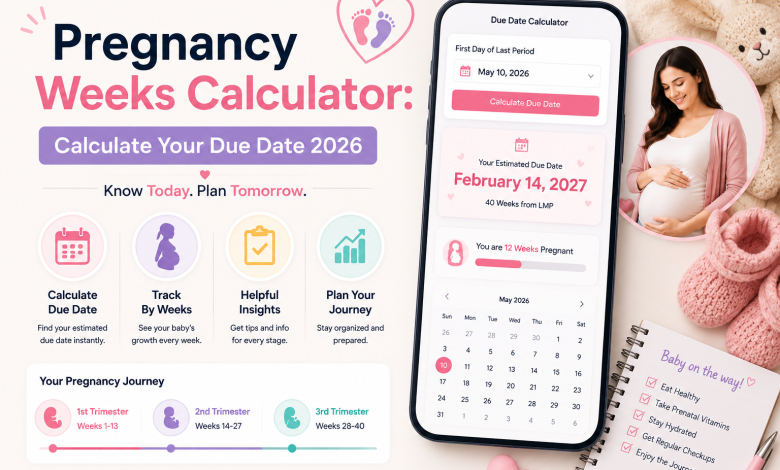
You just found out you’re pregnant.
Congratulations! 🎉
But now you’re wondering: When is my baby due? What week am I? How does this even work?
Here’s what’s confusing: Pregnancy dating is weird. You’re not “pregnant” from the day you have sex. You’re “pregnant” from your last menstrual period (LMP), which happened BEFORE you even got pregnant.
Yes, really.
This means when you’re 4 weeks pregnant, you might only be 2 weeks into actual pregnancy. And when you get your due date, there’s a 2-week window where baby could arrive.
In this guide, I’m breaking down:
- How to calculate your pregnancy week (simple formula)
- How doctors actually date pregnancy (ultrasound method)
- What your due date really means (and when baby actually comes)
- Week-by-week what to expect (with a link to our complete guide)
- Common dating questions answered (why dates change, etc.)
By the end, you’ll know exactly how far along you are and when to expect your baby. No confusion.
How Pregnancy Weeks Calculator Works (The Simple Version)
The Basic Formula
Last Menstrual Period (LMP) = Week 0
+ 40 weeks = Due Date
That’s literally it.
Example:
- Your LMP: January 1
- 40 weeks (280 days)
- = Due Date: October 10
Most pregnancies last 38-42 weeks from the date you actually conceived, but doctors count from your last period. So they add 2 weeks to your actual conception date.
Why This Weird Counting System?
Because doctors don’t know exactly when you got pregnant.
You had sex on a specific day. You ovulated around day 14 of your cycle. Sperm lived for several days. Egg lived for 12-24 hours. They met at some point.
But WHEN exactly? Nobody knows without detailed tracking.
So doctors use your last menstrual period as the starting point. It’s the same for everyone, easy to remember, and statistically predictable.
Is it weird? Yes.
Does it work? Yes.
Pregnancy Weeks Calculator – Step by Step
Method 1: If You Know Your Last Menstrual Period (LMP)
This is the easiest method.
Step 1: Write Down Your LMP Date
Your last menstrual period = the first day your period started.
Not when it ended. When it STARTED.
Example: January 15, 2026
Step 2: Count Forward 280 Days
Add 40 weeks (280 days) to your LMP date.
Easy way:
- Take the month of your LMP
- Go forward 9 months
- Go back 1 week
Example:
- LMP: January 15
- 9 months = October 15
- 1 week = October 8 (due date)
Or use the Naegele’s Rule:
- Add 1 year
- Add 2 weeks
- Subtract 3 months
Example:
- LMP: January 15, 2026
- 1 year = January 15, 2027
- 2 weeks = January 29, 2027
- 3 months = October 29, 2026 (close enough!)
Step 3: That’s Your Due Date!
October 8-29 = Your estimated due date
Important: This is ESTIMATED. Baby could come 2 weeks before or 2 weeks after.
Method 2: If You Know Your Conception Date
If you tracked ovulation or know exactly when you got pregnant:
Conception Date + 38 weeks = Due Date
(or + 266 days)
Example:
- Conceived: January 15
- 38 weeks = October 10 (due date)
This is more accurate than LMP method, but most people don’t track this precisely.
Method 3: If You Had an Early Ultrasound
This is the MOST ACCURATE method.
Ultrasound at 8-13 weeks can pinpoint due date within 3-4 days.
Doctor measures baby’s size and calculates:
Baby's current measurements + Growth rate = Due Date
Why it’s accurate: Every baby is different size, but at 8-13 weeks, all babies are very similar size. By measuring, doctor knows exactly how far along you are.
If your ultrasound dating disagrees with LMP dating (off by more than a week), trust the ultrasound. It’s more accurate.
How Many Weeks Am I? (Find Your Current Week)
The Formula
Today's Date - Last Menstrual Period Date = Number of Days Pregnant
Divide by 7 = Number of Weeks Pregnant
Example:
- LMP: January 1, 2026
- Today: February 5, 2026
- Days pregnant: 35 days
- Weeks pregnant: 35 ÷ 7 = 5 weeks
You’re 5 weeks pregnant.
Online Calculator Method
Want an easy way? Use this formula:
Number of days since LMP = ___
Divide by 7 = ___ weeks
Remainder = ___ days into current week

You're ___ weeks and ___ days pregnant
Example:
- 45 days since LMP
- 45 ÷ 7 = 6 weeks
- Remainder = 3 days
- You’re 6 weeks and 3 days pregnant
Pregnancy Timeline: What Week Are You At?
First Trimester (Weeks 1-12)
Weeks 1-4: You might not even know you’re pregnant yet!
- This is “before” pregnancy (but counting from LMP)
- Baby is just cells
- You probably haven’t missed period yet
- No symptoms usually
Weeks 5-8: Early pregnancy
- Missed period (usually how you find out)
- Baby growing rapidly
- Morning sickness might start
- Fatigue common
- [Read: What to Expect Week by Week](internal link to #9)
Weeks 9-12: First trimester ending
- Baby developing organs
- Nausea peak (might improve soon!)
- First ultrasound often happens here
- Due date gets confirmed/adjusted
Second Trimester (Weeks 13-26)
Weeks 13-16: Starting to show
- Morning sickness usually ends (relief!)
- Energy returning
- Bump starting to show
- Baby size of avocado
Weeks 17-20: Anatomy ultrasound
- Important ultrasound checks baby’s development
- Can find out baby’s sex if you want
- Baby moving (you might feel it soon)
- Cravings might start
Weeks 21-26: Viability point
- Baby could survive if born now (rare, but possible)
- Definitely feeling baby kick
- Back pain might start
- Stretch marks might appear
Third Trimester (Weeks 27-40)
Weeks 27-30: Getting bigger
- Baby gets heavier
- You get more uncomfortable
- Swelling common
- Baby practice breathing
Weeks 31-36: Getting ready
- Baby moving into head-down position
- Braxton Hicks contractions common (“practice contractions”)
- Sleep getting harder
- Back pain increasing
Weeks 37-40: Full term!
- Baby officially “full term” at 37 weeks
- Could come anytime now
- Cervical checks might start
- Waiting game begins
📧 What Week Are You At?
Use our calculator above, but still confused about what’s normal at YOUR week?
Join our weekly newsletter for week-by-week guides specific to your stage:
- Week 5-8 guides (early pregnancy)
- Week 13-16 guides (second trimester)
- Week 30+ guides (third trimester)
- What to expect each specific week
- When to actually worry
Real answers from someone who’s been there.
[Email Signup Form Here – Inline CTA #2]
Due Date FAQs (Common Questions Answered)
Q: Why does my due date keep changing?
A: Different dating methods give slightly different results.
- LMP method: Estimates due date
- Ultrasound method: More accurate
- Doctor adjusts when more accurate info arrives
First ultrasound is usually most accurate (within 3-4 days). After 20 weeks, ultrasound is less accurate for dating (could be off by 2 weeks).
So: If your doctor changes your due date after ultrasound, that’s normal and probably more accurate.
Q: When will my baby actually arrive?
A: Only 5% of babies are born on their exact due date.
- 20% born before due date
- 75% born by 1 week after due date
- Some go 2 weeks past due date
So: Your due date is a guess. Baby might come 2 weeks early or 2 weeks late. Both are completely normal.
Q: What if I don’t remember my last period?
A: Get an ultrasound to date the pregnancy.
Ultrasound at 8-13 weeks can determine due date within 3-4 days, even if you don’t remember your LMP.
If you’re further along, ultrasound is less accurate, but still helpful.
Q: Are “due weeks” and “gestational age” the same?
A: Yes, basically.
“Gestational age” = how many weeks since your LMP “Due date” = when baby should arrive (40 weeks from LMP)
Doctors use these terms interchangeably.
Q: What if my periods are irregular?
A: Ultrasound dating is even more important for you.
Irregular periods make LMP dating unreliable. Ultrasound at 8-13 weeks gives accurate due date.
Don’t stress. Doctor will figure it out.
Q: Can I go past my due date?
A: Yes. And it’s stressful.
If you go past 40 weeks:
- Doctors monitor more closely
- You get more frequent ultrasounds
- At 41-42 weeks, doctor usually induces labor
- Going past 42 weeks increases risks
But going 1 week past due date? Completely normal.
Q: Is my baby’s gestational age the same as age after birth?
A: No, they’re different until 2 years old.
When baby is born, they’re 40 weeks “old.”
At 1 month old, they’re actually ~4-5 weeks corrected age (accounting for prematurity if applicable).
Doctors use “corrected age” until age 2-3 to account for the fact baby was growing in utero.
Q: When do I count “40 weeks”?
A: From your last menstrual period.
Week 1 of pregnancy = the week your period started Week 40 = due date
So if your period started January 1, week 40 is around October 8.
The Real Truth About Due Dates
Here’s what you need to know:
Your due date is not a deadline. It’s a guess.
Your baby doesn’t know the calendar. Baby doesn’t care what your doctor thinks the due date is.
Baby will come when baby is ready (usually within 2 weeks of your due date).
So don’t stress if:
- You’re 3 days past due date (normal!)
- You’re 1 week early (normal!)
- Your due date changed (normal!)
- You’re having a girl and baby comes later (girls statistically come later)
- You’re having a boy and baby comes earlier (boys statistically come earlier)
The vast majority of babies arrive within 2 weeks of their due date. Just not on the exact day.
Use Our Week-by-Week Guide
Now that you know how far along you are, want to know what to expect?
Check out our complete [Pregnancy Week-by-Week Guide](internal link to #9):
- Every single week explained
- What’s happening with baby
- What’s happening with your body
- What’s normal (and what’s not)
- When to worry, when to relax
It’s like having a pregnancy guide for each week. Much better than googling and getting scared!
Trimester Guides (By Stage)
Where are you at?
First Trimester (Weeks 1-12):
- [What Can I Eat in First Trimester](internal link to #10)
- [Week-by-Week Guide](internal link to #9)
- [Best Pregnancy Pillows for Sleep](internal link to #1 or #6)
- [Ginger for Morning Sickness](internal link to #7)
Second Trimester (Weeks 13-26):
- [Safe Foods to Eat](internal link to #8)
- [Week-by-Week Guide](internal link to #9)
- [Maternity Compression Socks for Swelling](internal link to #3)
Third Trimester (Weeks 27-40):
- [Best Pregnancy Pillows for Back Pain](internal link to #6)
- [Safe Exercises During Pregnancy](to be written)
- [Week-by-Week Guide](internal link to #9)
Check out these related guides:
- Pregnancy Week by Week: All 40 Weeks Explained – What to expect each week, including early trimester
- Safe Foods During Pregnancy: Complete Guide – Deep dive into all pregnancy food safety (all trimesters)
- Best Ginger Supplements for Morning Sickness – If food is making you nauseous, this helps
Quick Reference: Pregnancy Timeline
Week 4: Might take pregnancy test (positive!)
Week 5: Might confirm with doctor
Week 8: First ultrasound usually happens
Week 12: End of first trimester
Week 13: Start of second trimester (less risk now!)
Week 20: Anatomy ultrasound (see baby clearly!)
Week 24: Viability point (baby could survive if born)
Week 28: Third trimester begins
Week 37: Full term! Could come anytime
Week 40: Due date arrives
Week 42: Doctor usually induces if not here yet
The Bottom Line
How to calculate your pregnancy week:
- Find your last menstrual period date
- Add 40 weeks (or 280 days)
- That’s approximately your due date
- If you had ultrasound, trust that dating more
- Remember: Due date is a guess, baby might come 2 weeks early or late
What week are you at?
Count the days since your LMP, divide by 7, and boom—you know your week.
When is baby coming?
Sometime within 2 weeks of your due date. Probably. Maybe.
Pregnancy dating isn’t an exact science. But it’s close enough!