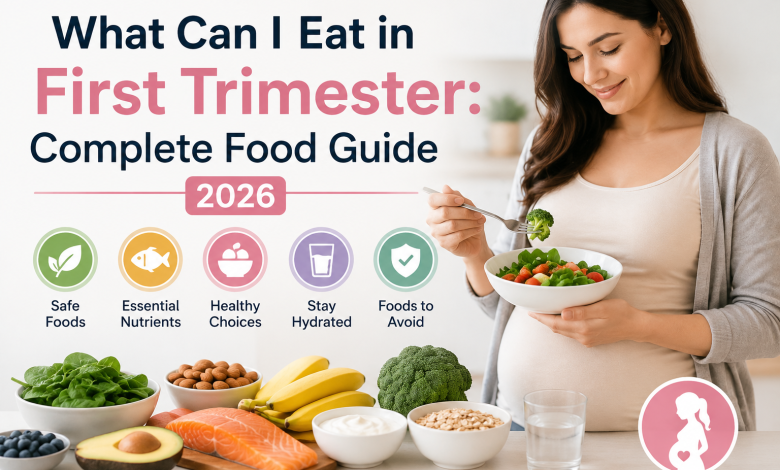
What Can I Eat in First Trimester: Complete Food Guide 2026
The first trimester is amazing—and terrifying.
You’re excited about being pregnant, but suddenly EVERYTHING feels risky. Can you eat sushi? Is lunch meat safe? What about unpasteurized cheese?
Then you Google it and get 10 different answers.
I was there too. During my first trimester, I spent HOURS researching what was actually safe to eat. I talked to my doctor, read CDC guidelines, and looked at real science.
Here’s what I discovered: Most pregnancy food rules are WAY more cautious than they need to be.
The real answer is simple: IF IT’S COOKED, IT’S USUALLY SAFE.
In this guide, I’m breaking down exactly what you CAN eat in your first trimester, what you need to avoid, and WHY. No fear-mongering. Just honest answers based on real science.
The Real Truth About First Trimester Food Safety
Before we dive in, I want to be clear: I’m not a doctor. Always talk to your healthcare provider about YOUR specific situation.
That said, pregnancy food rules often feel contradictory because we’re being EXTRA cautious.
Here’s the reality:
The biggest food risks in pregnancy are:
- Bacteria (listeria, E. coli, salmonella) – Can harm baby
- Undercooked meat – Can carry bacteria
- Mercury – Can harm baby’s brain development
- Excess caffeine – Can increase miscarriage risk
- Alcohol – Can cause fetal alcohol syndrome
Everything else? Usually fine if cooked properly.
Let’s break it down.
What You CAN Eat in First Trimester (The Good News)
Most Foods Are Safe (Really!)
Here’s what might surprise you: The list of safe foods in your first trimester is MUCH longer than the list of foods to avoid.
You can eat almost everything, with one rule: Make sure it’s cooked.
Let me show you:
Seafood & Fish
Safe options:
- ✅ Cooked salmon (amazing for baby’s brain!)
- ✅ Cooked shrimp
- ✅ Cooked tuna
- ✅ Cooked canned tuna (up to 6oz per week)
- ✅ Cooked lobster
- ✅ Cooked clams
- ✅ Cooked cod
Why cooked matters: Raw fish can have bacteria. Cooked fish kills bacteria but keeps the nutrients.
Example: You CAN eat sushi IF it’s cooked (like tempura shrimp or cooked crab rolls). You should AVOID raw sushi (salmon sashimi, raw tuna).
Pro tip: Most restaurants have cooked sushi options. Just ask!
Meat & Poultry
Safe options:
- ✅ Cooked chicken (all types)
- ✅ Cooked beef (all types, even rare is technically safe if cooked to 145°F)
- ✅ Cooked turkey
- ✅ Cooked pork
- ✅ Cooked lamb
- ✅ Cooked deli meat (heated until steaming)
- ✅ Cooked hot dogs (heated until steaming)
Why cold deli meat matters: Deli meat is processed and can contain listeria bacteria. If you heat it until steaming, it’s safe. Cold deli meat? Skip it.
Example: You CAN have a deli sandwich IF the meat is heated. Cold deli meat sandwich? Not ideal in first trimester.
Dairy & Cheese
Safe options:
- ✅ Pasteurized milk (regular, almond, oat, soy – all fine)
- ✅ Pasteurized yogurt
- ✅ Pasteurized cheese (99% of cheese in US is pasteurized)
- ✅ Pasteurized ice cream
- ✅ Pasteurized sour cream
Why pasteurized matters: Pasteurization kills bacteria. Almost all cheese in the US is pasteurized. You’d have to try HARD to find unpasteurized cheese.
Example: Store-bought cheese? Safe. Fancy artisanal unpasteurized cheese from specialty shop? Avoid in first trimester.
Eggs
Safe options:
- ✅ Fully cooked eggs (scrambled, fried, boiled)
- ✅ Cooked egg dishes
- ✅ Pasteurized eggs (if you’re worried about raw eggs)
Avoid:
- ❌ Raw eggs (in homemade mayo, cookie dough, etc.)
- ❌ Runny yolks (undercooked)
Why fully cooked matters: Raw/undercooked eggs can have salmonella. Fully cooked eggs are safe.
Produce
Safe options:
- ✅ All fruits (washed well)
- ✅ All vegetables (washed well, cooked or raw)
- ✅ Salads (washed well)
- ✅ Sprouts (cooked – raw sprouts have higher bacteria risk)
Why washing matters: Produce can have bacteria from soil. Wash with water. That’s it. You don’t need to peel everything.
Pro tip: Listeria bacteria can hide in unwashed produce. Spend 30 seconds rinsing your vegetables. Done.
Grains & Carbs
Safe options:
- ✅ All bread (any kind)
- ✅ All pasta (any kind)
- ✅ All rice (any kind)
- ✅ All cereal (any kind)
- ✅ Oats
- ✅ Potatoes
- ✅ All other grains
No restrictions here! Eat what sounds good.
Caffeine (Small Amounts)
Safe options:
- ✅ Coffee (up to 200mg caffeine/day)
- ✅ Tea (up to 200mg/day)
- ✅ Soda (up to 200mg/day)
- ✅ Chocolate
Why 200mg limit: High caffeine is linked to higher miscarriage risk. 200mg is about 1 large coffee.
Example:
- 1 cup coffee = 95-200mg caffeine ✅
- 2 cups coffee = 190-400mg caffeine (over the limit)
- Tea = 25-50mg per cup ✅
- Coke = 34mg ✅
What You Should AVOID in First Trimester
Foods with Listeria Risk
These need to be HOT, not cold:
- ❌ Cold deli meats (unless heated)
- ❌ Cold hot dogs (unless heated)
- ❌ Unpasteurized soft cheeses (very rare in US)
- ❌ Pâté (if refrigerated)
- ❌ Smoked salmon (if not cooked)
Rule: If it’s meant to be eaten cold and it’s not shelf-stable, heat it until steaming.
Raw/Undercooked Meat
Definitely avoid:
- ❌ Raw steak (rare steak)
- ❌ Raw sushi (salmon sashimi)
- ❌ Undercooked chicken
- ❌ Undercooked eggs
- ❌ Raw cookie dough
- ❌ Raw cake batter
Why: Can contain bacteria (salmonella, E. coli).
High-Mercury Fish
Avoid these high-mercury fish:
- ❌ Shark
- ❌ Swordfish
- ❌ King mackerel
- ❌ Tilefish
Limit to 6oz per week:
- ⚠️ Albacore tuna
- ⚠️ Sea bass
- ⚠️ Pike
Why: Mercury harms baby’s brain development. Other fish like salmon and cod are low-mercury.
Alcohol
Completely avoid:
- ❌ Beer
- ❌ Wine
- ❌ Liquor
- ❌ Even “one drink”
Why: No amount of alcohol is proven safe in pregnancy. Fetal alcohol syndrome is real.
Food Rules by Trimester (First Trimester Edition)
First Trimester Specifics (Weeks 1-12)
Your baby is forming organs right now. This is the critical period.
Safe foods:
- All cooked seafood
- All cooked meat
- All pasteurized dairy
- All fruits & vegetables (washed)
- All grains
- Up to 200mg caffeine
Avoid:
- Alcohol (any amount)
- Raw/undercooked meat
- Cold deli meat (unless heated)
- High-mercury fish
- Unwashed produce
Special first trimester consideration: Morning sickness
If you’re nauseous:
- Eat what sounds good (even if it’s weird)
- Small frequent meals work better than large ones
- Ginger can help (we have a [full ginger guide here](link to article #7))
- Crackers, toast, bland foods often help
Common First Trimester Foods – Safe or Not?
The Questions I Get Asked Most
“Can I eat sushi?”
Short answer: Yes, IF it’s cooked.
Long answer:
- Cooked sushi (tempura, cooked crab, cooked shrimp) = ✅ SAFE
- Raw sushi (salmon sashimi, raw tuna) = ❌ AVOID
Raw fish CAN contain parasites and bacteria. Cooked fish kills both. Most restaurants have cooked sushi options.
Pro tip: Order “California rolls” (imitation crab – cooked) or “tempura rolls” (cooked shrimp).
“Can I eat deli meat?”
Short answer: Yes, IF you heat it until steaming.
Long answer:
- Cold deli meat = ❌ AVOID (listeria risk)
- Heated deli meat = ✅ SAFE (heat kills bacteria)
This surprises people! Pregnant women CAN eat deli meat—it just needs to be hot. Heat it in microwave for 30 seconds until steaming. Then it’s safe.
“Can I eat cheese?”
Short answer: Yes, almost all cheese is fine.
Long answer:
- Store-bought cheese (99% of US cheese) = ✅ SAFE (pasteurized)
- Fancy artisanal soft cheese = ❌ AVOID (might be unpasteurized)
- Hard cheeses = ✅ ALWAYS SAFE
Don’t stress. The cheese in your grocery store fridge is pasteurized. Listeria in cheese is extremely rare.
“Can I eat cold salads?”
Short answer: Yes, just wash them well.
Long answer:
- Store-bought salad (pre-washed) = ✅ SAFE
- Salad you made yourself = ✅ SAFE (if washed)
- Unwashed salad from dirty source = ❌ AVOID
Wash your lettuce. That’s it. Listeria can hide in unwashed produce. A 30-second water rinse eliminates almost all risk.
“Can I eat eggs?”
Short answer: Yes, IF fully cooked.
Long answer:
- Scrambled eggs (fully cooked) = ✅ SAFE
- Fried eggs with runny yolk = ❌ AVOID
- Boiled eggs = ✅ SAFE
- Raw cookie dough = ❌ AVOID
Fully cooked = safe. Undercooked = bacteria risk.
“Can I drink coffee?”
Short answer: Yes, up to 200mg caffeine per day.
Long answer:
- 1 cup coffee (95-200mg) = ✅ SAFE
- 2 cups coffee (190-400mg) = ❌ TOO MUCH
- Tea = ✅ SAFE (25-50mg per cup)
- Soda = ✅ SAFE (34mg per can)
One regular coffee = fine. Two large coffees = too much.
📧 Getting Overwhelmed?
You’re not alone. First trimester food rules can feel confusing.
Here’s what helps: Join our email list. Every Tuesday, I send:
- Pregnancy tips that answer YOUR questions
- Week-by-week guides showing what’s normal
- Honest product reviews from testing
- Support from other pregnant women
Real answers. No fear-mongering. Just truth.
[Email Signup Form Here – Inline CTA #2]
Nutrition Tips for First Trimester
What to Eat MORE of
Protein (baby’s building blocks):
- Cooked fish (salmon especially)
- Cooked chicken
- Eggs
- Yogurt
- Beans
Folate (prevents birth defects):
- Leafy greens (spinach, kale)
- Broccoli
- Legumes
- Fortified cereals
Iron (prevents anemia):
- Red meat
- Chicken
- Beans
- Fortified cereals
Calcium (baby’s bones):
- Milk
- Yogurt
- Cheese
- Fortified alternatives
Foods That Actually Help Morning Sickness
- Small frequent meals (better than 3 large ones)
- Ginger (scientifically proven to reduce nausea)
- Vitamin B6 (works with ginger)
- Crackers & toast (bland = easier to stomach)
- Lemon (smell can help!)
- Peppermint tea
Full guide: Check out our complete [morning sickness relief guide](link to article #7) with specific supplements tested.
FAQ: What Can I Eat in First Trimester?
Q: Can I eat peanuts? Will my baby have allergies?
A: Yes, eat peanuts. This is a myth.
Studies show eating peanuts during pregnancy does NOT increase baby’s allergy risk. Actually, eating peanuts might REDUCE allergy risk.
Eat them if you like them.
Q: Can I eat spicy food?
A: Yes, spicy food is completely safe.
It won’t hurt the baby or cause miscarriage. Eat what tastes good.
Q: Can I eat chocolate?
A: Yes! Chocolate is safe.
It has a tiny bit of caffeine (not enough to worry about), and it’s delicious. Enjoy.
Q: Should I eat for two?
A: No. You need only about 300 extra calories per day in first trimester.
Not double the food. Just healthy, nutrient-dense meals. Quality over quantity.
Q: What if I crave weird things?
A: Food cravings are normal. Eat what sounds good.
Your body is telling you what it needs. If you crave ice cream, eat ice cream. If you crave pickles, eat pickles. Both are fine.
Q: Is it safe to diet during pregnancy?
A: Don’t diet. Eat enough.
Your baby needs calories and nutrients. Focus on healthy foods, not restriction.
The Real Truth: Most Foods Are Safe
Here’s what I want you to remember:
Pregnancy food rules exist to protect your baby. They’re not meant to make you miserable.
The foods you CAN eat far outweigh the foods you should avoid.
One deli meat sandwich that’s not heated? Probably fine. One high-mercury fish? Probably fine. One drink at a wedding before you knew you were pregnant? Definitely fine.
Pregnancy is not about perfection. It’s about being generally careful while enjoying your life.
The foods to truly avoid are small:
- Alcohol (any amount)
- Raw meat
- High-mercury fish (regularly)
- Unwashed produce
Everything else? Enjoy it.
Your First Trimester Food Action Plan
This Week
- [ ] Write down your top 5 food concerns
- [ ] Check them against this list
- [ ] Breathe (most foods are safe!)
- [ ] Eat what sounds good
Going Forward
- Wash your produce (30 seconds of water)
- Heat cold deli meat until steaming
- Cook your fish and meat fully
- Limit caffeine to 200mg/day
- No alcohol
That’s it. You don’t need complicated rules.
More First Trimester Guides
Want more information about your first trimester?
Check out these related guides:
- Pregnancy Week by Week: All 40 Weeks Explained – What to expect each week, including early trimester
- Safe Foods During Pregnancy: Complete Guide – Deep dive into all pregnancy food safety (all trimesters)
- Best Ginger Supplements for Morning Sickness – If food is making you nauseous, this helps
The Bottom Line
What can you eat in your first trimester?
Almost everything, with one simple rule: Make sure it’s cooked.
Cooked = safe. Raw/cold/undercooked = avoid.
That’s the whole secret.
Stop worrying about every food choice. Eat well, stay generally careful, and trust your body.
Your baby is tough. And you’ve got this